
Anúncios
Mastering traffic rules is no longer limited to thick manuals and boring classrooms. Modern mobile apps have revolutionized how we learn road safety.
Getting your driver’s license or simply becoming a more informed pedestrian requires understanding the rules of the road. Traditional learning methods often feel outdated and disconnected from our digital lifestyle. That’s where traffic rule learning apps step in, offering interactive, engaging, and convenient ways to absorb essential road safety knowledge.
Anúncios
Whether you’re a nervous first-time driver preparing for your written exam or an experienced motorist looking to refresh your knowledge, these apps provide flexible learning opportunities. They transform complex regulations into digestible, memorable lessons that fit seamlessly into your daily routine. 🚗
Why Traditional Traffic Education Methods Fall Short
Traditional driver’s education has remained relatively unchanged for decades. Students typically sit through lengthy classroom sessions, flipping through dense manuals filled with text-heavy explanations. This approach doesn’t align with how modern learners process information.
Anúncios
Many people find it difficult to retain information from static textbooks. The brain learns more effectively through interactive experiences, immediate feedback, and spaced repetition—elements that conventional methods rarely incorporate. Additionally, scheduling conflicts often prevent busy individuals from attending fixed-time classes.
Physical driving schools also require significant time and financial investment. Commuting to classes, adjusting personal schedules, and paying high tuition fees create barriers for many potential learners. The rigid structure doesn’t accommodate different learning paces or styles.


How Mobile Apps Transform Traffic Rule Learning 📱
Mobile applications have fundamentally changed the educational landscape across numerous subjects, and traffic rules are no exception. These apps leverage technology to create personalized, adaptive learning experiences that match individual needs.
The portability factor alone makes apps incredibly valuable. You can study during your lunch break, while commuting on public transportation, or relaxing at home. This flexibility eliminates scheduling conflicts and maximizes otherwise wasted moments throughout your day.
Modern learning apps employ gamification techniques that make studying genuinely enjoyable. Points, badges, leaderboards, and progress tracking trigger psychological rewards that motivate continued engagement. What once felt like tedious memorization becomes an entertaining challenge.
Interactive Quizzes That Actually Work
Quality traffic rule apps incorporate sophisticated quiz systems that go beyond simple multiple-choice questions. They present realistic scenarios, requiring you to apply knowledge rather than merely recall facts. This approach builds practical understanding that translates directly to real-world driving situations.
Immediate feedback mechanisms help reinforce correct answers while explaining why incorrect options are wrong. This instant clarification prevents misunderstandings from taking root. The apps track your performance patterns, identifying weak areas that need additional attention.
Adaptive algorithms adjust question difficulty based on your demonstrated mastery. If you consistently answer certain topics correctly, the app introduces more challenging variations. If you struggle with specific rules, it provides additional practice until you’ve achieved competency.
Key Features to Look for in Traffic Rule Apps ✨
Not all traffic education apps offer the same quality or features. Understanding what separates exceptional apps from mediocre ones helps you make informed choices about where to invest your learning time.
Comprehensive content coverage is non-negotiable. The app should address all relevant traffic regulations, road signs, right-of-way rules, and safety practices. Incomplete content leaves dangerous knowledge gaps that could lead to accidents or failed exams.
User interface design significantly impacts learning effectiveness. Clean, intuitive navigation reduces cognitive load, allowing you to focus on content rather than figuring out how to use the app. Visual clarity, logical organization, and responsive controls enhance the overall experience.
Visual Learning Through Sign Recognition
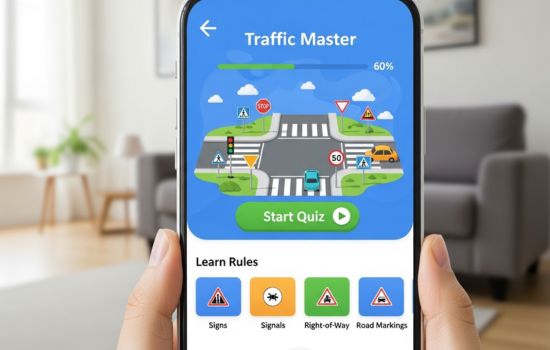
Traffic signs communicate critical information through symbols and colors. Effective apps include extensive sign libraries with high-quality images, detailed explanations, and contextual examples. Visual recognition exercises help cement these symbols in your memory.
Some advanced apps incorporate augmented reality features, allowing you to point your phone’s camera at real traffic signs to receive instant information. This bridging of digital learning and physical environment creates powerful educational moments.
Color-coded categorization helps organize the hundreds of different signs into manageable groups. Regulatory signs, warning signs, and informational signs each serve distinct purposes that become clearer through systematic study.
Preparing for Your Written Driving Test 📝
The written examination represents a significant milestone on the path to obtaining your driver’s license. Success requires thorough preparation and comprehensive understanding of traffic regulations, not just superficial memorization.
Quality apps simulate actual test conditions, presenting questions in formats identical to official exams. This familiarity reduces anxiety and builds confidence. You’ll know exactly what to expect when you sit down for the real assessment.
Practice tests should include hundreds of questions covering all examination topics. Repetition with varied questions prevents you from simply memorizing specific answers while ensuring genuine comprehension of underlying principles.
Understanding Rather Than Memorizing
The fundamental difference between successful and struggling test-takers often comes down to understanding versus memorization. Apps that explain the reasoning behind rules help you develop intuitive knowledge that persists long after the exam.
When you understand why certain regulations exist—protecting vulnerable road users, preventing accidents, ensuring traffic flow—you’re more likely to remember and apply them correctly. This deeper comprehension also makes you a safer, more conscientious driver.
Scenario-based learning presents realistic situations where multiple rules might apply simultaneously. You learn to prioritize information, assess contexts, and make informed decisions—skills that prove invaluable both on tests and actual roads.
Beyond the Test: Becoming a Safer Driver 🛡️
Passing your written exam is important, but the ultimate goal extends far beyond earning a license. Traffic rule knowledge directly correlates with road safety, accident prevention, and responsible driving behavior.
Understanding right-of-way rules prevents intersection collisions. Knowing proper following distances reduces rear-end accidents. Recognizing speed limit rationale promotes appropriate velocity choices in varying conditions. Each rule serves a protective purpose.
Apps that contextualize regulations within safety frameworks help users appreciate why compliance matters. This perspective shift transforms rules from arbitrary restrictions into sensible guidelines that protect everyone sharing the road.
Staying Updated with Changing Regulations
Traffic laws evolve as transportation technology advances and safety research reveals new insights. Quality apps receive regular updates reflecting current regulations, ensuring your knowledge remains accurate and relevant.
Changes in distracted driving laws, emerging vehicle technologies like electric scooters, and updated intersection designs all require corresponding rule adjustments. Outdated information could lead to violations or dangerous assumptions.
Push notifications can alert you when significant regulatory changes occur in your region. This ongoing education keeps licensed drivers informed long after their initial training, promoting continuous safety improvement.

Customization and Personalized Learning Paths 🎯
Individual learners have unique strengths, weaknesses, schedules, and preferences. The best educational apps recognize this diversity and offer customization options that optimize personal learning experiences.
You might excel at understanding sign meanings but struggle with right-of-way scenarios. Personalized study plans allocate more practice time to challenging areas while efficiently reviewing topics you’ve already mastered.
Goal-setting features let you establish timelines for test preparation. The app then creates structured learning schedules that distribute study sessions optimally, applying spaced repetition principles for maximum retention.
Multi-Language Support for Diverse Learners
Traffic education should be accessible regardless of your native language. Apps offering multiple language options democratize road safety knowledge, ensuring immigrant communities and non-native speakers can learn effectively.
Translation quality matters significantly—poor translations can create dangerous misunderstandings about critical safety rules. Professional localization ensures concepts are communicated accurately across linguistic boundaries.
Audio support helps learners with reading difficulties or those who prefer auditory learning. Hearing rules explained aloud reinforces visual information and accommodates different learning modalities.
Community Features and Social Learning 👥
Learning becomes more engaging when shared with others. Many traffic rule apps incorporate social elements that foster community, healthy competition, and collaborative knowledge building.
Leaderboards showcase top performers, motivating users to improve their scores and knowledge mastery. This gamification element adds excitement without compromising educational integrity.
Discussion forums allow learners to ask questions, share experiences, and clarify confusing regulations. Peer explanations often resonate differently than formal instruction, providing valuable alternative perspectives.
Study group features enable friends preparing for exams together to track mutual progress, share achievements, and encourage each other through challenging material. Social accountability significantly improves completion rates.
Accessibility and Inclusive Design Principles ♿
Educational resources should accommodate users with varying abilities. Apps designed with accessibility in mind ensure that visual impairments, motor challenges, or cognitive differences don’t create unnecessary learning barriers.
Screen reader compatibility allows visually impaired users to navigate content effectively. Proper labeling, logical navigation structures, and audio descriptions make apps usable for everyone.
Adjustable text sizes, high-contrast modes, and customizable color schemes help users with visual sensitivities or specific reading needs. These seemingly small features dramatically improve usability for significant population segments.
Simplified interface options benefit users with cognitive challenges or those who feel overwhelmed by complex layouts. Providing choices between streamlined and feature-rich experiences respects diverse user preferences.
Offline Functionality for Uninterrupted Learning 🔌
Internet connectivity isn’t always reliable or available. Apps with robust offline capabilities ensure that learning continues regardless of connection status—perfect for rural areas, international travel, or data conservation.
Downloaded content libraries let you access lessons, quizzes, and reference materials without internet access. Your progress syncs automatically once connectivity resumes, maintaining seamless learning continuity.
This feature particularly benefits users with limited data plans or those who spend time in areas with poor cellular coverage. Education shouldn’t depend on constant connectivity.
Cost-Effectiveness Compared to Traditional Methods 💰
Financial considerations influence educational decisions. Traffic rule apps typically cost a fraction of traditional driving school tuition while offering comparable or superior learning outcomes.
Many apps operate on freemium models—basic features available at no cost, with optional premium upgrades for enhanced functionality. This approach lets you assess quality before committing financially.
Even premium subscriptions rarely exceed the price of a single traditional class session. The value proposition becomes compelling when you consider unlimited practice, personalized learning, and permanent access.
Free updates ensure your one-time or subscription investment remains valuable as content improves and regulations change. Traditional textbooks become obsolete, requiring expensive replacements.
Integration with Practical Driving Lessons 🚙
Theoretical knowledge and practical skills complement each other. Apps that acknowledge this relationship often include features connecting written rules to behind-the-wheel application.
Video demonstrations show how traffic rules play out in real driving situations. Watching experienced drivers navigate complex scenarios builds mental models that inform your own future actions.
Some apps partner with driving schools, allowing instructors to assign specific lessons or track student progress through theoretical material. This integration creates cohesive educational experiences bridging classroom and car.
Preparing thoroughly with an app before beginning practical lessons maximizes your value from expensive behind-the-wheel instruction. You’ll spend less time on basics and more on advanced skill development.
Making the Most of Your Learning App Experience 🌟
Simply downloading an app doesn’t guarantee success. Effective usage requires strategy, consistency, and active engagement with features designed to optimize learning outcomes.
Establish regular study schedules rather than sporadic cramming sessions. Daily fifteen-minute sessions prove more effective than weekly hour-long marathons due to how memory consolidation works.
Take advantage of analytics and progress tracking features. Reviewing your performance data reveals patterns—certain times of day when retention peaks, specific topics requiring additional focus, or question types causing difficulties.
Don’t rush through material just to complete modules. Genuine understanding requires reflection and repeated exposure. If you find yourself guessing answers, slow down and review explanatory content.
Combine app learning with real-world observation. When riding as a passenger or walking, notice how traffic rules apply in actual situations. This contextual reinforcement deepens comprehension significantly.
The Future of Traffic Education Technology 🚀
Educational technology continues evolving rapidly. Emerging innovations promise to make traffic rule learning even more effective, accessible, and engaging in coming years.
Virtual reality simulations could place learners in realistic traffic scenarios without physical risk. You might practice decision-making at complex intersections or experience consequences of rule violations in safe virtual environments.
Artificial intelligence tutors may provide conversational learning experiences, answering questions in natural language and adapting explanations to individual comprehension levels. This personalized instruction scales expert teaching to unlimited users.
Integration with vehicle systems could provide context-aware learning—your car identifying situations where specific rules apply and offering gentle educational reminders. This ambient learning reinforces knowledge continuously.
Traffic rule apps represent more than convenient study tools—they’re gateways to safer roads, more confident drivers, and democratized access to essential knowledge. By leveraging technology thoughtfully, we can transform how society approaches driver education, making roads safer for everyone. Whether you’re preparing for your first license or refreshing decades-old knowledge, these apps offer valuable resources that fit modern lifestyles while delivering proven educational outcomes. The question isn’t whether to use them, but rather how to maximize their potential for your personal learning journey. 🎓
