
Anúncios
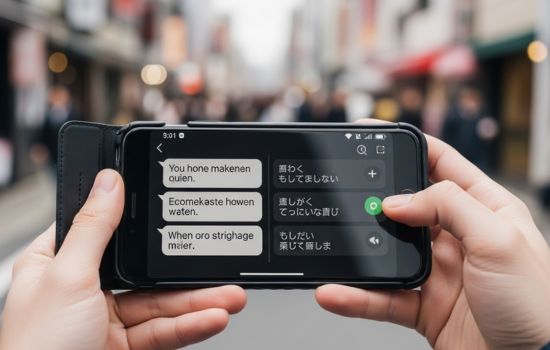
Real-time voice translation apps are transforming how we communicate across languages, breaking down barriers instantly during travel, business meetings, and everyday conversations worldwide.
Imagine standing in a bustling Tokyo street market, trying to negotiate the price of handcrafted souvenirs, or attending an international business conference where participants speak six different languages. These scenarios once required professional interpreters or extensive language study, but technology has revolutionized cross-cultural communication in ways our grandparents could never have imagined.
Voice translation applications have evolved from novelty tools with questionable accuracy into sophisticated communication platforms powered by artificial intelligence and machine learning. These apps analyze speech patterns, context, and linguistic nuances to deliver translations that capture not just words, but meaning and intent. Whether you’re a frequent traveler, international business professional, or simply someone who loves connecting with people from different cultures, understanding how these tools work can open up a world of possibilities.
🌍 How Real-Time Voice Translation Actually Works
The magic behind instant voice translation involves multiple complex processes happening simultaneously within milliseconds. When you speak into your device, the application captures your voice through the microphone and immediately begins processing the audio signal. Advanced speech recognition algorithms convert these sound waves into text, identifying individual words, phrases, and sentences while accounting for accents, speaking speed, and background noise.
Once the speech has been converted to text in your source language, neural machine translation engines take over. These AI-powered systems don’t simply swap words from one language to another like old dictionary-based methods. Instead, they understand grammatical structures, idiomatic expressions, and contextual meanings to produce natural-sounding translations that preserve the speaker’s original intent.
The translated text is then synthesized back into speech using text-to-speech technology. Modern voice synthesis has progressed remarkably, moving beyond robotic monotones to produce natural-sounding speech with appropriate intonation, emotion, and rhythm. Some advanced applications even attempt to match the original speaker’s tone and emotional inflection.


⚡ The Speed Factor: Understanding Latency
Real-time translation isn’t truly instantaneous—there’s always some delay, known as latency. However, the best applications have reduced this delay to just a couple of seconds, making conversations flow naturally. The latency depends on several factors including your internet connection speed, the processing power of your device, and the complexity of the languages being translated.
Cloud-based processing allows apps to leverage powerful servers that can handle complex translations faster than your smartphone alone could manage. However, this also means you typically need an internet connection. Some newer apps offer offline capabilities with downloaded language packs, though these usually provide slightly reduced accuracy compared to their online counterparts.
📱 Key Features That Define Quality Translation Apps
Not all voice translation applications are created equal. The difference between a frustrating experience and seamless communication often comes down to specific features and implementation quality. Understanding what separates excellent apps from mediocre ones helps you choose the right tool for your needs.
- Conversation Mode: Allows two people to speak naturally, with the app automatically detecting which language is being spoken and providing translations in both directions without manual switching.
- Offline Functionality: Downloaded language packs enable basic translation without internet connectivity, essential for remote travel locations or areas with poor signal.
- Camera Translation: Point your camera at signs, menus, or documents for instant visual translation, complementing voice features perfectly.
- Accent Recognition: Advanced algorithms that understand regional accents and dialects, not just textbook pronunciation.
- Conversation History: Saves previous translations for reference, helpful for remembering important phrases or reviewing business discussions.
- Multi-Language Support: The breadth of language options determines whether the app works for your specific needs, from common languages to rare dialects.
🎯 Accuracy Considerations
Translation accuracy varies significantly based on language pairs. Apps generally perform better with well-resourced languages like English, Spanish, French, German, and Mandarin Chinese because these languages have extensive training data. Less common language pairs or highly technical vocabulary can present challenges even for the best applications.
Context plays a crucial role in translation quality. Simple, direct statements translate more reliably than complex sentences with multiple clauses, idioms, or cultural references. Speaking clearly, at a moderate pace, and avoiding slang improves results dramatically. The best apps continuously learn from user interactions, improving their accuracy over time through machine learning algorithms.

✈️ Practical Applications for Travelers
International travel becomes infinitely more enjoyable and stress-free when language barriers dissolve. Real-time translation apps transform how travelers navigate foreign countries, turning potentially frustrating situations into opportunities for genuine cultural exchange and connection.
Navigating transportation systems in foreign cities becomes manageable when you can ask locals for directions and understand their responses. Ordering food at restaurants moves beyond pointing at pictures on menus—you can ask about ingredients, request modifications for dietary restrictions, and even engage in friendly conversation with servers about regional specialties.
Emergency situations—which are stressful enough without communication barriers—become safer when you can explain medical symptoms to healthcare providers or report problems to local authorities. Hotels, tour guides, shops, and service providers all become more accessible when you can communicate your needs clearly and understand responses accurately.
🏨 Beyond Tourist Interactions
Real-time voice translation opens doors to deeper cultural experiences. Imagine chatting with local artisans about their craft, discussing history with museum guides, or making genuine friendships with people you meet during your travels. These meaningful interactions transform superficial tourism into authentic cultural immersion.
Solo travelers particularly benefit from the confidence that comes with knowing they can communicate effectively anywhere. The psychological comfort of having a reliable translation tool encourages more adventurous exploration off the beaten path, where authentic experiences often await but English might be rarely spoken.
💼 Business and Professional Applications
International business has always required navigating language differences, but real-time translation technology has democratized global commerce. Small businesses can now engage international suppliers and customers without hiring full-time interpreters or learning multiple languages fluently.
Video conferences with international partners become more inclusive when all participants can communicate in their native languages. While hiring professional interpreters remains advisable for critical legal negotiations or contract discussions, translation apps facilitate routine business communications, preliminary discussions, and relationship building.
Trade shows, international conferences, and networking events become more productive when language barriers don’t prevent valuable connections. Professionals can engage with potential partners, customers, and collaborators from around the world without the awkwardness and limitations of struggling through a language they barely speak.
📊 Remote Work Revolution
The global shift toward remote work has created internationally distributed teams where colleagues may not share a common language fluently. Real-time translation tools facilitate daily communications, making it possible to build cohesive teams across continents and time zones.
Customer service departments use translation technology to support clients worldwide without requiring representatives who speak every language. While human nuance remains important for complex issues, translation apps enable basic support and information sharing across language barriers efficiently.
🎓 Educational and Learning Opportunities
Paradoxically, real-time translation apps can actually enhance language learning rather than replace it. Language students use these tools to practice conversation with native speakers, receiving immediate feedback on their pronunciation and phrasing. The apps function as portable tutors, available 24/7 for practice sessions.
Understanding how phrases are naturally expressed in another language helps learners internalize proper grammar and vocabulary usage. Comparing your attempted translations with the app’s suggestions reveals patterns and improves linguistic intuition over time. Many applications include features specifically designed for learners, such as slow playback and written transcripts.
Educational institutions are incorporating translation technology into international exchange programs and distance learning initiatives. Students can participate in collaborative projects with peers worldwide, accessing expert instructors who teach in different languages, and engaging with primary source materials that haven’t been translated into their native language.
🔒 Privacy and Security Considerations
When using voice translation apps, you’re essentially sharing your conversations with the application provider’s servers. Understanding the privacy implications matters, especially for sensitive personal or business communications. Reputable apps clearly disclose their data handling practices, but users should review privacy policies before discussing confidential information.
Some conversations should never be entrusted to third-party translation services. Legal proceedings, medical consultations involving private health information, sensitive business negotiations, and personal matters require professional human interpreters bound by confidentiality agreements. Translation apps serve many purposes beautifully, but recognizing their limitations protects your privacy and security.
For maximum privacy, consider apps offering offline translation modes, which process your speech locally on your device without sending audio to external servers. While these offline modes typically provide somewhat reduced accuracy, they ensure your conversations remain truly private.
🚀 The Future of Voice Translation Technology
Artificial intelligence continues advancing at a remarkable pace, and voice translation represents one of AI’s most practical and widely beneficial applications. Future developments promise even more natural conversations with virtually imperceptible latency, making translated discussions feel as natural as speaking with someone in your native language.
Emotion recognition and synthesis will allow translations to convey not just words but the speaker’s emotional state—excitement, concern, humor, or urgency. This emotional context significantly impacts meaning and will make translated conversations feel more genuine and human.
Augmented reality integration may soon allow wearable devices like smart glasses to provide real-time subtitles during face-to-face conversations, preserving eye contact and natural body language while eliminating language barriers entirely. Imagine attending an international event where everyone speaks their native language but everyone understands everyone else perfectly.
🌟 Accessibility Advances
Translation technology increasingly serves people with hearing or speech impairments, converting sign language to spoken language and vice versa. These accessibility applications represent profound quality-of-life improvements for millions of people worldwide, enabling more inclusive participation in society.
As neural networks become more sophisticated, rare and endangered languages will receive better support, helping preserve linguistic diversity while making communication accessible to speakers of languages currently underserved by technology.
💡 Tips for Getting the Best Results
Even the most advanced translation app performs better when you follow certain best practices. Speak clearly and at a moderate pace—rushing through sentences reduces accuracy significantly. Avoid mumbling or covering your device’s microphone, and try to minimize background noise when possible.
Use simple sentence structures, especially for important communications. Complex sentences with multiple dependent clauses challenge translation algorithms and increase the likelihood of misunderstandings. If something important gets mistranslated, rephrase and try again rather than pushing forward with potentially confusing results.
Learn a few basic phrases in the languages you use most frequently. Being able to greet people politely, say thank you, and apologize in someone’s native language shows respect and creates goodwill that makes conversations more pleasant for both parties. Use the app for more complex communications while demonstrating your effort to bridge the cultural gap.
| Situation | Best Practice | Why It Matters |
|---|---|---|
| Noisy environments | Move to quieter location or speak directly into microphone | Background noise interferes with speech recognition accuracy |
| Technical vocabulary | Use simpler synonyms or explain concepts differently | Specialized terms may not translate accurately |
| Important information | Verify understanding by having the other person repeat key details | Confirms critical information wasn’t mistranslated |
| Poor connection | Switch to offline mode if available | Prevents frustrating delays and connection failures |
🌐 Choosing the Right App for Your Needs
The ideal translation app depends on your specific use case. Casual travelers prioritizing convenience might prefer apps with extensive offline capabilities and camera translation for signs and menus. Business professionals might prioritize accuracy for specific industry terminology and conversation history features for reference.
Consider which language pairs you need most frequently. Some apps excel with certain language combinations while struggling with others. Reading reviews from users working with your specific languages provides valuable insights beyond general ratings and marketing claims.
Free versions of popular apps often provide excellent functionality for occasional use, while subscription plans unlock features like unlimited translations, additional languages, and ad-free experiences. Evaluate your usage frequency and feature requirements to determine whether premium subscriptions justify their cost for your situation.
🤝 Building Connections Across Languages
Ultimately, translation technology serves one beautiful purpose: connecting human beings across the artificial barriers of language. These apps don’t replace the value of learning languages or understanding other cultures deeply, but they dramatically lower the threshold for initial connections and mutual understanding.
Every conversation made possible by translation technology represents an opportunity—to make a new friend, learn something unexpected, help someone in need, or conduct business that benefits both parties. The technology handles the linguistic mechanics, freeing you to focus on the human elements: empathy, curiosity, humor, and genuine interest in the person you’re communicating with.
As these tools become more sophisticated and widely adopted, we move closer to a world where language differences don’t prevent collaboration, friendship, or understanding. That future depends not just on better algorithms, but on people willing to reach across cultural divides with openness and respect—with a little help from the remarkable technology in their pockets.
Real-time voice translation apps represent one of technology’s most democratizing achievements, placing powerful communication tools in everyone’s hands. Whether you’re navigating a foreign train station, negotiating an international deal, or simply sharing a laugh with someone who speaks a different language, these applications transform what’s possible in our increasingly connected world. 🌏
